Improviser
Improviser
Anxious and driven in equal measure, always patching the system faster than it can break.
Filter · Scanner · Seeker · Vigilant · System · Fast
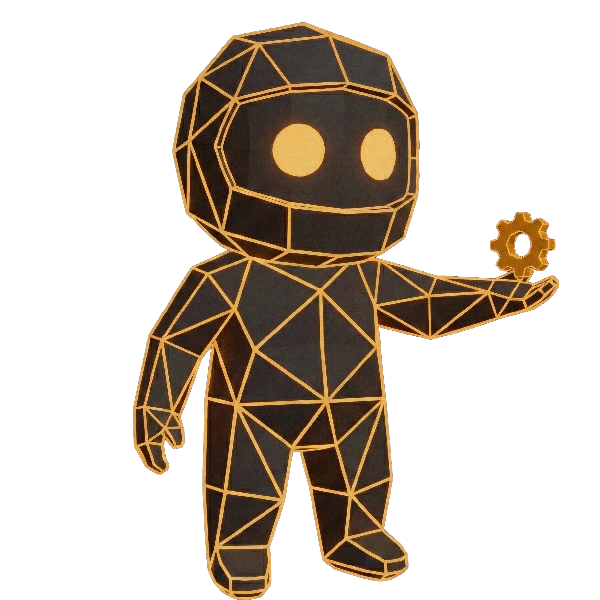
Superpower
Real-Time Optimization
Shadow
The Fidget Loop
| Fuel | The Exploit |
|---|---|
| Kryptonite | Arbitrary Rules |
Thirty questions. About five minutes. Free.
The system works. You can already see three ways it could work better. Seeker drive and Vigilant threat detection run in parallel, generating a constant stream of optimization targets, while Filter processing keeps the sensory noise low and Scanner attention tracks the full variable space. Fast plasticity means you can act on what you see almost immediately, rewiring your approach between attempts.
The engine
Iterative Optimization
Seeker drive keeps pushing for a better configuration while Vigilant scanning keeps surfacing what could go wrong. Instead of locking up under that tension, Fast plasticity resolves it by running small, rapid experiments. Each failure costs almost nothing, because you update and move on before the stakes accumulate.
The structure
The Feedback Loop
Fast plasticity and System processing create a tight test, fail, adjust cycle, and Scanner attention feeds it by monitoring all variables at once. You probe, measure the response, and adjust in real time, spending on iterations what other types spend on the plan. The loop runs until the system is optimized or the problem is solved.
The result
Rapid, anxiety-informed optimization. What you build is meant to hold under pressure; permanence was never the brief. The same reflex that catches faults early keeps you patching systems that are already running, because your hardware treats good enough as a problem to solve.
Neural architecture
The raw configuration of this neurotype. Like a character sheet, these are the base stats. Follow any inactive pole to explore that variant.
Sensory
Focus
Drive
Threat
Social
Plasticity
These dimension spectrums are derived from real scientific research (view documentation).
This profile is a narrative layer on top of the science to make it easier to understand. It maps the baseline mode of this neurotype, before masking or compensating.
In your personalized report: exact dimension scores plus 6 deep dives calibrated to your intensity.
Strengths and shadows
The greatest asset is always linked to the greatest vulnerability. The superpower cannot exist without managing the shadow.
Superpower
Real-Time Optimization
A system breaks, and it stays running while you work. You diagnose the failure points live and patch them faster than anyone expected: Vigilant scanning finds the flaw, Fast rewiring deploys the fix.
The Shadow
The Fidget Loop
Your system never reaches rest state. Seeker drive keeps demanding a better configuration while Vigilant scanning surfaces new risks, and Fast plasticity always has another patch ready. You optimize systems that are already working because your hardware cannot stop tuning.
In your personalized report: your stress signature, which dimensions break first under pressure.
How they operate
How this neurotype makes decisions, moves through the world, and manages energy. What fuels it, what breaks it, and how to recover.
Operating system
The Iteration Engine
You process by running rapid, low-stakes experiments. Seeker drive supplies the hypothesis, System processing puts it on trial, and Fast plasticity banks whatever comes back before the loop restarts. A failed test feeds the engine as cleanly as a successful one.
Navigation style
The Zig-Zag
Straight lines are for other people. Scanner attention tracks the full field and Vigilant threat detection flags obstacles in real time, so the moment a better path appears, Fast rewiring lets you pivot onto it.
Fuel
The Exploit
A loophole or an optimization that nobody else spotted. Seeker drive lights up when a system has a hidden vulnerability, and System processing locks onto it like a puzzle. The elegance of the hack is the reward; the outcome is almost beside the point.
Kryptonite
Arbitrary Rules
Being forced to follow a process your System logic has already flagged as inefficient. Vigilant threat detection reads enforced rigidity as a threat to your ability to respond to real dangers, and Seeker drive stalls when the path to a better solution is blocked by policy.
Recovery Protocol
Logic Without Stakes
Sudoku, Tetris, optimization games, code golf. System processing gets the structured input it craves and Fast plasticity gets its novelty, while the Vigilant scanner finally stands down, because nothing real is at risk.
In your personalized report: your energy budget, what charges and drains you across all 6 dimensions.
Ecology
How these traits interact with the environment. Some "symptoms" may be context-dependent frictions rather than inherent deficits.
Specialization
Your hardware is built for real-time system optimization under changing conditions. Every dimension is tuned for broad threat detection, rapid analytical iteration, and low-cost context switching, and this configuration resolves the problem-to-solution cycle at very low cost when the variables will not hold still.
In small-group ancestral contexts, this is the tactical adapter: the one who adjusts the hunting strategy when the wind shifts, reroutes the group when the trail floods, and patches the shelter mid-storm rather than waiting for clear skies to rebuild. The group's planners and builders depend on this configuration to keep their structures functional when reality deviates from the blueprint. Without it, good plans fail on first contact with bad conditions.
High-match environments
High-feedback, fast-iteration environments with measurable systems and real-time consequences. Rapid cycle times, clear metrics, tolerance for unconventional methods, and problems that change shape between attempts. Environments where the rules are knowable but the conditions are not, and where the person who adapts fastest wins. When every action produces immediate data, a failed attempt costs little, and optimization is valued over compliance, this hardware spends the least to do the most.
High-friction environments
Procedure-locked, slow-feedback environments. Regulatory compliance roles, legacy institutions with fixed protocols, committees that require consensus before action, and cultures where deviation from the established process is treated as insubordination. These environments demand patience with known inefficiency, deference to precedent, and the suppression of your optimization instinct, all of which run expensive on this hardware. The bill is quieter than disobedience: a system stuck running continuous threat detection with no permission to act on what it finds.
Adaptive niche
Hacking, InfoSec, Day Trading, Speedrunning, Performance Tuning, Crisis IT, Emergency Triage.
Correlating clinical cluster
GAD / ADHD (Combined Type). Seeker drive keeps you restless, Vigilant scanning keeps you alert to risk, and Fast plasticity keeps you switching contexts. In an environment without enough feedback loops, that combination can get read as gaming addiction or generalized anxiety. Hand the same hardware a live problem and it looks like tactical genius.
Clinical labels describe how this wiring reads in mismatched environments, not what is wrong with the hardware. Read more →
In your personalized report: your environment guide, where you do your best work.
Growth path
How to level up. Not about changing who someone is, but learning to pilot the machine with higher skill and lower friction.
Perspective shift
Reframe Slowness as Deep Verification. The Architect or Specialist types who take months to ship are not incompetent. Their Deep plasticity builds at a structural level that prevents the very failures you end up patching, which makes their slow process a different kind of quality control instead of a bottleneck.
Relational Strategy
The Risk Brief
When proposing a shortcut or a process change, lead with the threat it mitigates, not the speed it gains. Your Scanner awareness sees the whole field, but your teammates may only see you changing the plan. Frame the pivot as threat reduction, and their Vigilant systems will accept it faster.
Adaptive Success
The Tactical Optimizer
The systems still running behind you are running because you found the patch before anyone else saw the fault. No one notices a crisis that never happened, but the work counts all the same.
Alloys
Each neurotype is made of 15 pairs of interacting dimensions. These alloys explain the specific nuances of the personality.
Filter + Scanner
The Broadcaster
Your filters keep the volume low and your attention casts wide. You move through chaos untouched, but the cost is that important signals get the same weight as noise.
Filter + Seeker
The Juggernaut
Low sensory cost and high drive let you push harder and longer than most systems can sustain. The risk is steamrolling through signals your filters never registered.
Filter + Vigilant
The Chess Player
Low sensory noise lets your threat detection run on clean, analytical data. You don't feel the danger physically; you model it. Cold, strategic, and rarely blindsided.
Filter + System
The Objectivist
Low sensory noise and analytical social processing let you read people as patterns in a clean system. You see behavioral data others miss, but emotional signals fall below your threshold.
Filter + Fast
The Teflon
Low input and fast adaptation mean almost nothing leaves a mark. You move through disruption without absorbing it. Your archive is clean where others carry scar tissue.
Scanner + Seeker
The Firestarter
Wide attention and high drive send you sprinting in five directions at once. You generate more starting energy than any system can sustain, and you've moved on before the last spark catches.
Scanner + Vigilant
The Sentinel
Wide attention locked onto threat detection means you're constantly scanning for what could go wrong. You catch danger early, but your system never fully stands down.
Scanner + System
The Switchboard
Wide attention and analytical social processing let you track many people as nodes in a system. You coordinate effortlessly, but emotional signals outside the network map don't register.
Scanner + Fast
The Jack of All Trades
Wide attention and fast adaptation let you pick up the basics of anything quickly and move on. Your skills are broad, shallow, and exactly as deep as the moment required.
Seeker + Vigilant
The Overachiever
High drive and active threat detection create a relentless cycle of output and collapse. You push because the fear of falling behind never turns off, and your system only has two speeds.
Seeker + System
The Empire Builder
High drive and analytical social processing mean you optimize systems that include people. You see networks where others see relationships, and you move those networks toward outcomes without sentimentality.
Seeker + Fast
The Early Adopter
High drive and fast plasticity mean you chase the next wave before it peaks. You pivot instantly, lock onto the new signal, and leave old systems behind without friction.
Vigilant + System
The Skeptic
Active threat detection and analytical social processing mean you manage risk through structure. You don't trust feelings; you trust contracts. Your boundaries are architecture, not emotion.
Vigilant + Fast
The Reflex
High threat reactivity and fast adaptation mean you startle easily and recover quickly. The alarm fires at low thresholds, but the signal clears fast. Jumpy on the surface, resilient underneath.
System + Fast
The Networker
Analytical social processing and fast adaptation create project-based connections that dissolve cleanly. You bond through shared utility, and when the context ends, the bond releases without residue.
In your personalized report: all 15 alloys ranked with extended analysis.
Unlock your personalized operating manual
Take the assessment to discover what this page can't tell you: your stress triggers, energy budget, and growth edges calibrated to your specific wiring.
- Stress signature: which dimensions break first
- Energy budget: what charges and drains you
- Environment guide: where you do your best work
- 6 deep dives calibrated to your exact intensity
- Growth map: your most flexible dimension
- Extended analysis for all 15 alloys
Already took the assessment? View your results →