Sensory
Filter ↔ Sponge
How your brain gates environmental input
What This Dimension Measures
Sensory Processing Sensitivity is the degree to which your nervous system allows unfiltered environmental input (sound, light, texture, temperature) to reach conscious awareness before screening it out.
Every second, your nervous system receives millions of signals from the world around you: sounds, light, textures, smells, temperature shifts, background motion. Your brain cannot process all of it consciously. It has to decide what gets through and what gets filtered out before it reaches awareness.
This dimension captures the width of that gate. Some nervous systems run a tight filter: they screen aggressively, letting only the most relevant signals through to conscious processing. Others run an open gate: they absorb a wide bandwidth of environmental data, processing far more of the raw sensory stream than the average person.
Neither setting is better. Both come with real advantages and real metabolic costs. The question is where your hardware sits on this spectrum, and what that means for how you move through the world.
At a Glance
Filter
- › You genuinely do not notice background noise that bothers others
- › Bright lights, strong smells, and rough textures rarely register as unpleasant
- › You can focus in almost any environment without needing to control conditions
- › People sometimes tell you that you missed the vibe of a room
- › Physical discomfort has to be significant before you notice it
- › You recover quickly from sensory-heavy environments like concerts and airports
Thrives in: Open offices, busy restaurants, loud events, travel (environments that would drain a Sponge) barely register
Sponge
- › You notice sounds, smells, and visual details that others miss entirely
- › Clothing tags, seams, and certain fabrics feel genuinely unbearable
- › You need recovery time after crowded or noisy environments
- › You pick up on emotional atmosphere the moment you walk into a room
- › Fluorescent lighting or overlapping conversations can make you feel physically ill
- › Caffeine, medication, and substances tend to hit you harder than expected
Thrives in: Controlled lighting, quiet spaces, soft textures, minimal visual clutter: environments built for low sensory load
Filter
Your nervous system runs a tight gate. Environmental input gets screened before it reaches conscious awareness. You process the signal, not the noise.
Filters tend to stay calm in chaotic environments: a loud restaurant, a crowded train, a busy open office. These spaces do not drain you the way they drain others. Your brain simply does not allocate processing resources to the background hum. You can hold a conversation at a construction site. You can sleep through a thunderstorm.
This comes at a cost. Tight filtering means you may miss subtle environmental signals: the shift in someone's tone, the slight temperature change in a room, the early warning signs that something in your environment has changed. Your brain has decided these signals are not worth conscious attention, and most of the time it is right. But sometimes the filtered-out data matters.
Filter Groups
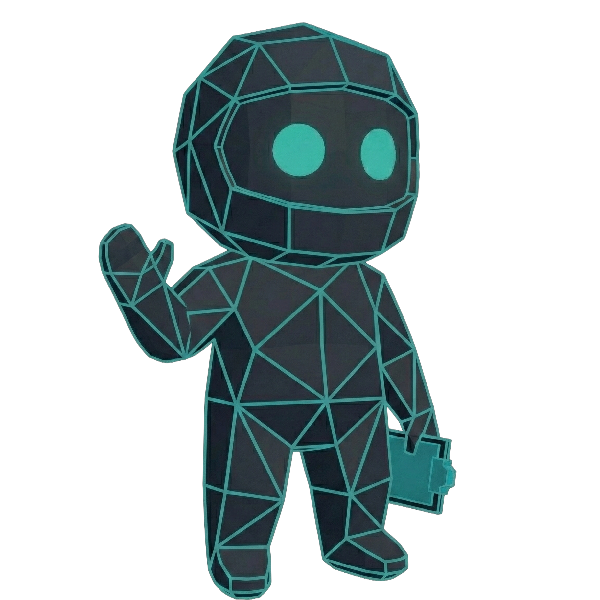
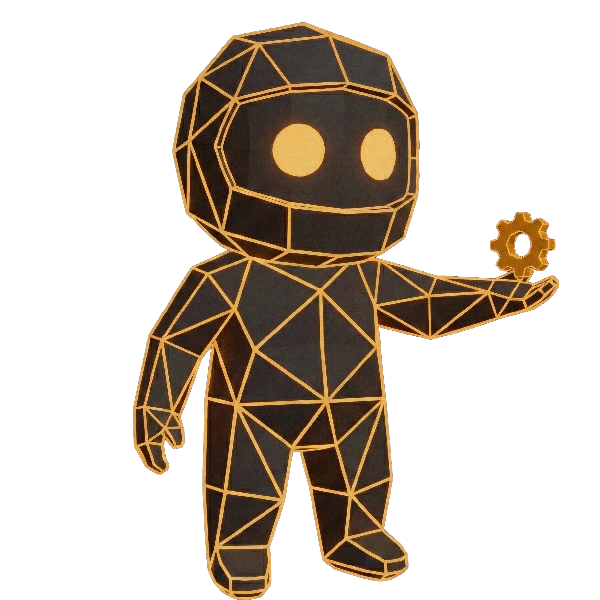
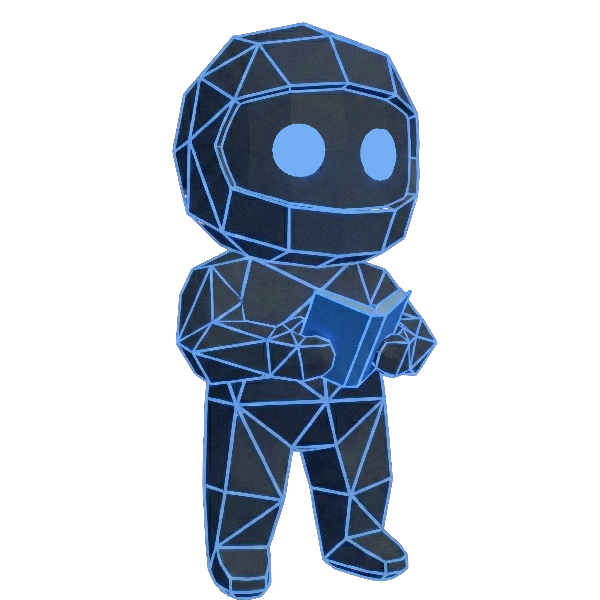
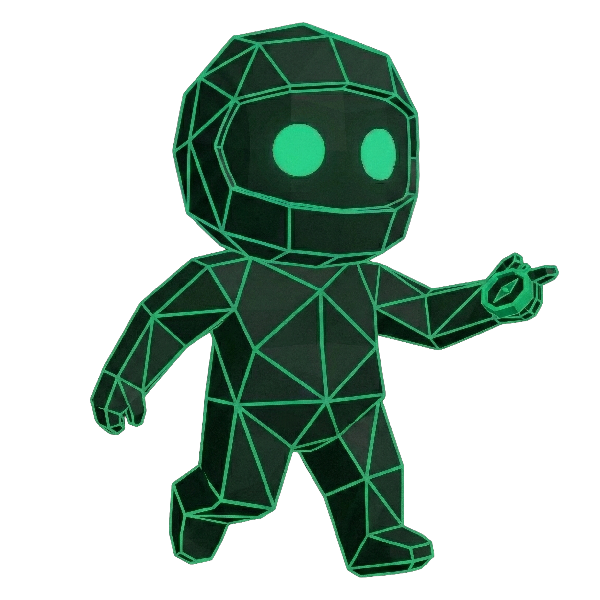
Filter Alloys
Your filters keep the volume low and your attention casts wide. You *move through chaos untouched*, but the cost is that important signals get the same weight as noise.
Low sensory intake and locked focus make you *nearly impossible to disturb*. You operate in sustained containment, and the world above the surface barely registers.
Low input and low drive mean your system runs on *minimal resources*. Almost nothing disrupts the baseline. The cost is that the landscape can shift around you while you hold still.
Low sensory cost and high drive let you *push harder and longer* than most systems can sustain. The risk is steamrolling through signals your filters never registered.
Your filters block the input and your threat system stays quiet. You walk through *almost anything undamaged*, and recklessness can hide inside that invulnerability.
Low sensory noise lets your threat detection run on *clean, analytical data*. You don't feel the danger physically; you model it. Cold, strategic, and rarely blindsided.
Low sensory noise and analytical social processing let you *read people as patterns in a clean system*. You see behavioral data others miss, but emotional signals fall below your threshold.
You read emotions clearly without absorbing the sensory weight. You can *hold space indefinitely* without burning out, which makes you the person everyone leans on and nobody checks in on.
Low input and permanent encoding mean what little gets through your filters *stays forever*. Your system is slow to update and hard to overwrite. Changes are rare but structural.
Low input and fast adaptation mean *almost nothing leaves a mark*. You move through disruption without absorbing it. Your archive is clean where others carry scar tissue.
Sponge
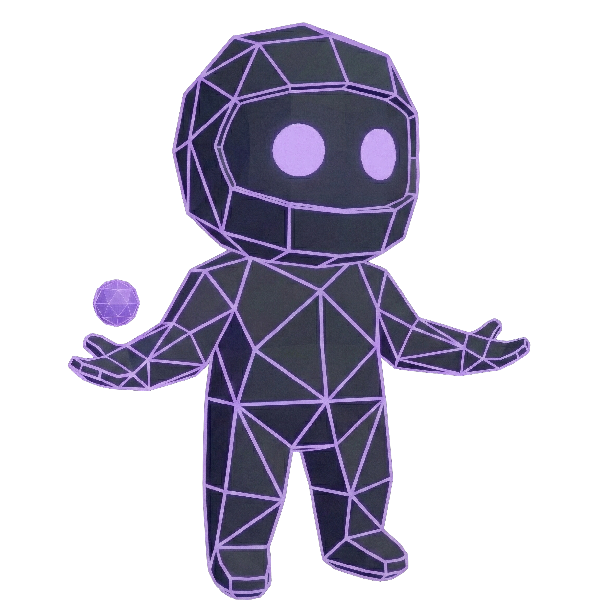
Your nervous system runs a wide-open gate. You absorb a large bandwidth of environmental data, processing far more of the raw sensory stream than most people around you.
Sponges perceive the world at high resolution. You notice the flicker rate of fluorescent lights. You can tell when someone's mood shifts by a micro-expression that lasted half a second. You register the texture of every fabric touching your skin, simultaneously. Your perception is rich, detailed, and constant.
This comes at a real metabolic cost. Processing all that data takes energy. Your nervous system is doing more work per second than a Filter's system, and that work adds up. Sponges often hit a wall of sensory fatigue that Filters never experience. It is not weakness. It is the predictable result of running more hardware at higher throughput.
Sponge Groups


Sponge Alloys
Your senses take in everything and your attention tries to track all of it. You catch *every signal in the room*, but your system burns through bandwidth fast.
Your senses take in everything but your focus funnels it to *a single, intense point*. You produce concentrated output by blocking out the flood, but anything outside that beam hits you unfiltered.
High sensory cost and low drive make withdrawal *the most rational strategy your system has*. The world is expensive to process and the rewards don't offset the price.
You crave the intensity that overloads your senses. The thing you chase is *the thing that costs you most*, and the cycle between surge and crash defines your operating rhythm.
Your senses amplify every signal but your threat system doesn't flag it as danger. You experience the world at *full intensity without the brakes*, and you chase that voltage.
High sensory input feeds directly into an active threat system. The world registers as loud *and* dangerous, and your resting processing cost is higher than most people's crisis mode.
You absorb every social signal but run it through *logic instead of feeling*. You see more interpersonal data than anyone in the room; you just process it through a different system.
You absorb the emotional state of the room at *full sensory resolution*. You don't read the atmosphere; you become it. The processing cost is enormous.
You absorb everything at full resolution and *encode it permanently*. Old pains stay vivid. Old joys stay accessible. Your archive is the richest and heaviest in the room.
High sensory input and rapid plasticity let you *mirror any environment instantly*. You absorb the room and reshape to match it, which is powerful until you lose track of the original signal.
Biological Basis
The brain is a prediction machine. Under Karl Friston's predictive coding framework, the cortex continuously generates top-down predictions about incoming sensory data. When the prediction matches reality, the signal is suppressed. When it does not match, the discrepancy, a "prediction error," is flagged for conscious processing. Individual differences in the strength of this top-down suppression determine how much raw sensory data reaches awareness. Strong suppression means a tight filter. Weak suppression means a wide-open gate.
At the circuit level, sensory gating is measurable. The P50 auditory gating paradigm, where the brain's electrical response to paired clicks reveals how much redundant input gets suppressed, shows reliable individual differences. The thalamus acts as the primary relay station, and its filtering behavior varies across people. GABAergic tone (GABA being the brain's primary inhibitory neurotransmitter) regulates how much input gets suppressed before reaching the cortex. Lower GABAergic tone means more sensory data processed at a conscious level.
Elaine Aron's research on Sensory Processing Sensitivity (SPS) identified roughly 20 to 30% of the population as highly sensitive processors. Brain imaging studies by Bianca Acevedo and colleagues confirm that high-SPS individuals show greater activation in areas associated with awareness, empathy, and depth of processing when exposed to identical stimuli. Genetic research has linked SPS to variants in the serotonin transporter gene (5-HTTLPR), suggesting a heritable biological basis for differences in sensory gating threshold.
Crucially, high sensitivity is not simply a vulnerability. Jay Belsky and Michael Pluess's Differential Susceptibility Theory (2009) demonstrated that the same genetic variants associated with sensitivity, including 5-HTTLPR, produce worse outcomes in adverse environments but *better* outcomes in supportive ones. This is not a deficit gene. It is a plasticity gene. W. Thomas Boyce and Bruce Ellis's Biological Sensitivity to Context framework (2005) reached the same conclusion independently: highly sensitive children are not fragile. They are more responsive to their environment in both directions. In hostile conditions they suffer more. In supportive conditions they thrive more. The implication for sensory processing is direct: a Sponge brain is not a broken Filter brain. It is a higher-bandwidth system whose performance depends more heavily on whether the environment matches its operating requirements.
This dimension is informed by published neuroscience research on sensory processing sensitivity (Aron, 1997; Acevedo et al., 2014), predictive coding (Friston, 2010), GABAergic sensory gating, differential susceptibility (Belsky & Pluess, 2009), and biological sensitivity to context (Boyce & Ellis, 2005). Brain imaging and genetic studies support the existence of meaningful individual differences in sensory gating. This assessment is an exploratory framework, not a validated diagnostic instrument.
Find out where you fall on the Sensory dimension.
Take the assessment