Overclocker
Overclocker
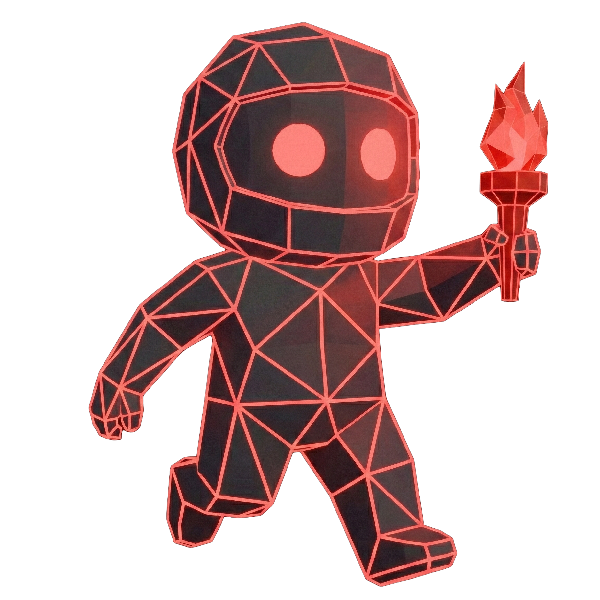
Phasic geniuses who master new skills in days, then vanish the moment the puzzle is solved.
Sponge · Laser · Seeker · Vigilant · System · Fast
Superpower
Hyper-Adaptation
Shadow
The Wired Crash
| Fuel | The Unsolved |
|---|---|
| Kryptonite | Maintenance |
Thirty questions. About five minutes. Free.
A problem lands and everything else in the room goes quiet. You operate in high-velocity, phasic bursts: Sponge sensitivity and Seeker drive give you the obsessive intensity of a sprinter, and Laser focus and Fast rewiring give you the adaptability of a hacker. You don't just work the problem; you surge at it. You lock onto a target, accelerate to maximum speed, devour the information, and the moment the pattern breaks open, you dump the cache and switch targets.
The engine
Cyclic Drive
You run on Phasic Energy. Your Seeker drive and Vigilant threat detection are in constant tension, generating massive internal heat. When they align, you enter a Super-State of hyper-productivity. When they de-sync, you crash. You are either On at 200% capacity or Off and recharging. There is no idle mode.
The structure
Serial Obsession
You are a Serial Monotropist. You do not multitask; you switch-task at extreme speed. Your Laser attention dives into a rabbit hole, your System processing maps the entire territory, and the moment the Unknown becomes Known, your Fast plasticity releases the lock. You abandon the project to find a new puzzle.
The result
A trail of brilliance and Abandonware. You achieve mastery in record time, but you leave a wake of 90%-finished projects because the dopamine hit comes from solving the problem, not maintaining the solution.
Neural architecture
The raw configuration of this neurotype. Like a character sheet, these are the base stats. Follow any inactive pole to explore that variant.
Sensory
Focus
Drive
Threat
Social
Plasticity
These dimension spectrums are derived from real scientific research (view documentation).
This profile is a narrative layer on top of the science to make it easier to understand. It maps the baseline mode of this neurotype, before masking or compensating.
In your personalized report: exact dimension scores plus 6 deep dives calibrated to your intensity.
Strengths and shadows
The greatest asset is always linked to the greatest vulnerability. The superpower cannot exist without managing the shadow.
Superpower
Hyper-Adaptation
Hand you an unsolved problem and your Vigilant threat detection files it as an emergency, dumping crisis-grade fuel into the Sponge-Laser-Seeker stack. You go hardest when something real is on the line, because the alarm will not let you stop until the unknown is neutralized.
The Shadow
The Wired Crash
When the burst ends, your Seeker drive stalls while your Vigilant scanning keeps running. The world goes gray, the engine has no fuel left, and the alarm system is still firing at nothing. So the post-project void arrives empty and anxious at once, and you are scanning for the next crisis before your system has recovered from the last one.
In your personalized report: your stress signature, which dimensions break first under pressure.
How they operate
How this neurotype makes decisions, moves through the world, and manages energy. What fuels it, what breaks it, and how to recover.
Operating system
The Sprint
You lock onto a problem, strip it to its parts, solve it, and move on. That burst rhythm has no cruising gear.
Navigation style
The Pivot
You move in sharp, calculated vectors. Your Fast rewiring means you will completely scrap a strategy the moment your Vigilant scanning detects the flaw that will sink the current path.
Fuel
The Unsolved
The moment a new system lands in front of you and your brain lights up, whether it is a new architecture or a live crisis nobody has a playbook for. The Sponge-Laser-Seeker stack fires hardest when the territory is unmapped.
Kryptonite
Maintenance
Being asked to maintain a system you already built and understand. Once the pattern is mapped, your Seeker drive withdraws fuel and the work becomes metabolically expensive.
Recovery Protocol
Total Disconnect
You cannot idle. You need to turn the machine off. Deep sleep, sensory deprivation, or low-stakes tasks to clear the RAM.
In your personalized report: your energy budget, what charges and drains you across all 6 dimensions.
Ecology
How these traits interact with the environment. Some "symptoms" may be context-dependent frictions rather than inherent deficits.
Specialization
Your hardware is optimized for rapid mastery and crisis-speed problem solving under pressure. Every dimension is tuned for maximum intake, intense analytical focus, and fast overwrite, and the whole assembly runs through a threat-aware system that treats unsolved problems as emergencies.
In small-group ancestral contexts, this is the breakdown fixer, the one who arrives at the point of failure, learns the system on contact, fixes it under pressure, and moves on to the next breakdown. This is the configuration that restores function when permanence fails, rather than the one that builds for permanence in the first place. The crises that land here are the ones that fall outside anyone's existing expertise, and meeting them on contact is what this configuration is for.
High-match environments
High-urgency, problem-dense environments with rapid feedback and novel challenges. Fast task cycling, clear success criteria, analytical autonomy, low demand for long-term social investment, high demand for learning speed. Roles where the next crisis arrives before the last solution cools, and detachment is an operational advantage. The running cost falls away wherever new problems keep arriving faster than the last ones can settle.
High-friction environments
Stable, relationship-dependent, maintenance-heavy environments with slow feedback. Long-tenure roles, pastoral care, committee governance, legacy system maintenance, roles requiring sustained emotional presence. You are three weeks into maintaining a system you finished mapping months ago. Nothing breaks, nothing changes, and the threat alarm keeps firing at a room where the emergency already ended. The steadier the work, the louder that signal runs on nothing.
Adaptive niche
Rapid Prototyping, Emergency Medicine, High-Frequency Trading, Cybersecurity, Fixer roles. Anywhere that requires massive bursts of intelligence followed by a reset.
Correlating clinical cluster
AuDHD. Laser focus and System processing lock onto a domain with autistic depth, while Seeker drive and Fast plasticity keep demanding change, the specialist-explorer profile that absorbs a domain at full resolution and pulls off the moment it is mapped. Vigilant threat detection adds a layer the Fearless variant does not carry, and it makes the swing physical: God Mode (Seeker and Vigilant aligned into one vector) and System Failure (Vigilant wins, Seeker stalls, burnout). In maintenance-starved environments that output/collapse cycle can look like cyclothymic swings, but it is the predictable metabolic cost of a stable Seeker-Vigilant configuration, not a Drive slider that will not hold its setting. Knowing it as a cycle is what makes it survivable.
Clinical labels describe how this wiring reads in mismatched environments, not what is wrong with the hardware. Read more →
In your personalized report: your environment guide, where you do your best work.
Growth path
How to level up. Not about changing who someone is, but learning to pilot the machine with higher skill and lower friction.
Perspective shift
Reframe Abandonment as Data Gathering. You are Done Learning: the file closes the instant the pattern resolves, and a closed file reads to the room as Quitting. Your role is to build the prototype, and to let someone else run the factory.
Relational Strategy
The Forecast
Name the cycle before it hits. Tell the people around you that you oscillate between high-output intensity and hard shutdown, and that the shutdown is not withdrawal or rejection. Partner with Steward or Anchor types who can hold continuity across your cycles. The relationship survives when the pattern is predictable, not when it is suppressed.
Adaptive Success
The Turnaround
When a system fails and no existing expertise covers the problem, you show up, learn the domain on contact, and restore function before the damage compounds. Most of the people who inherit that fix will never see how close it came to going under, and that gap between the rescue and the record is just the shape of the role.
Alloys
Each neurotype is made of 15 pairs of interacting dimensions. These alloys explain the specific nuances of the personality.
Sponge + Laser
The Lens
Your senses take in everything but your focus funnels it to a single, intense point. You produce concentrated output by blocking out the flood, but anything outside that beam hits you unfiltered.
Sponge + Seeker
The Icarus
You crave the intensity that overloads your senses. The thing you chase is the thing that costs you most, and the cycle between surge and crash defines your operating rhythm.
Sponge + Vigilant
The Exposed Nerve
High sensory input feeds directly into an active threat system. The world registers as loud and dangerous, and your resting processing cost is higher than most people's crisis mode.
Sponge + System
The Decoder
You absorb every social signal but run it through logic instead of feeling. You see more interpersonal data than anyone in the room; you just process it through a different system.
Sponge + Fast
The Shapeshifter
High sensory input and rapid plasticity let you mirror any environment instantly. You absorb the room and reshape to match it, which is powerful until you lose track of the original signal.
Laser + Seeker
The Obsessive
Locked focus and high drive aimed at one target produce extraordinary, concentrated output. The intensity is your engine. The cost is that direction is chosen by your wiring, not your deliberation.
Laser + Vigilant
The Perfectionist
Locked focus steered by your threat system toward the one thing most likely to fail. You don't worry broadly. You fixate with precision on whatever feels unresolved.
Laser + System
The Circuit
Locked focus and analytical social processing mean you engage with one person or system at a time, on logic. Social noise that doesn't follow structure gets dropped as irrelevant.
Laser + Fast
The Speed Runner
Locked focus and fast plasticity let you master systems rapidly and then discard them. You extract the core pattern, exhaust the challenge, and the old target loses all signal.
Seeker + Vigilant
The Overachiever
High drive and active threat detection create a relentless cycle of output and collapse. You push because the fear of falling behind never turns off, and your system only has two speeds.
Seeker + System
The Empire Builder
High drive and analytical social processing mean you optimize systems that include people. You see networks where others see relationships, and you move those networks toward outcomes without sentimentality.
Seeker + Fast
The Early Adopter
High drive and fast plasticity mean you chase the next wave before it peaks. You pivot instantly, lock onto the new signal, and leave old systems behind without friction.
Vigilant + System
The Skeptic
Active threat detection and analytical social processing mean you manage risk through structure. You don't trust feelings; you trust contracts. Your boundaries are architecture, not emotion.
Vigilant + Fast
The Reflex
High threat reactivity and fast adaptation mean you startle easily and recover quickly. The alarm fires at low thresholds, but the signal clears fast. Jumpy on the surface, resilient underneath.
System + Fast
The Networker
Analytical social processing and fast adaptation create project-based connections that dissolve cleanly. You bond through shared utility, and when the context ends, the bond releases without residue.
In your personalized report: all 15 alloys ranked with extended analysis.
Unlock your personalized operating manual
Take the assessment to discover what this page can't tell you: your stress triggers, energy budget, and growth edges calibrated to your specific wiring.
- Stress signature: which dimensions break first
- Energy budget: what charges and drains you
- Environment guide: where you do your best work
- 6 deep dives calibrated to your exact intensity
- Growth map: your most flexible dimension
- Extended analysis for all 15 alloys
Already took the assessment? View your results →