Technician
Technician
Anxious guardians of the machine, converting nervous energy into systems that never break.
Sponge · Laser · Steady · Vigilant · System · Fast
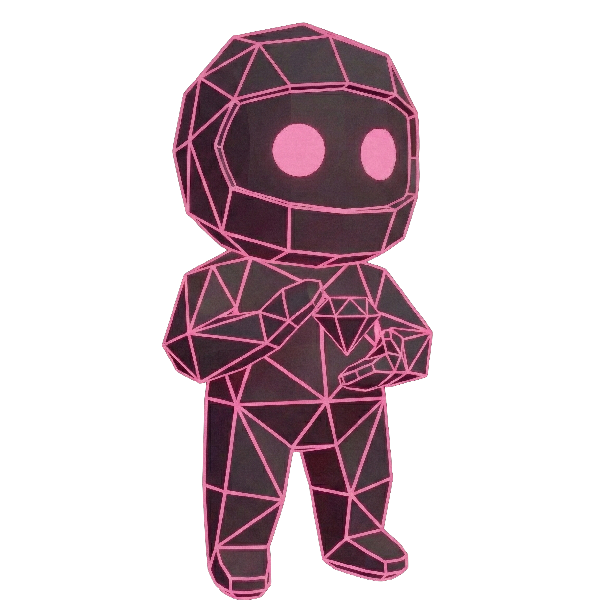
Superpower
Preventative Detection
Shadow
The Phantom Signal
| Fuel | The Green Board |
|---|---|
| Kryptonite | Cascading Alerts |
Thirty questions. About five minutes. Free.
You hear the sound before anyone else. A bearing that changed pitch by a fraction. A server fan running two hundred RPM faster than yesterday. A cable with a slight creak that was not there last week. Sponge sensitivity registers the deviation, Vigilant scanning flags it as a threat, and Laser focus locks on and holds until the anomaly is found and resolved.
The engine
The Watch Loop
Sponge input and Vigilant threat detection form a continuous monitoring system, every sensory deviation measured against a stored baseline. Steady drive keeps the energy constant and sustainable, so you patrol rather than sprint. The engine holds the same low, persistent RPM whether the board reads green or red.
The structure
The Rapid Patch
Laser focus isolates the fault, System processing traces it to a root cause, and Fast plasticity generates and tests solutions at speed, iterating until the anomaly resolves. You patch it in real time and move to the next checkpoint on the route, without stopping to study the failure at length.
The result
A system that never stays broken. The catch is that your hardware runs the monitoring loop even when nothing is wrong, because Vigilant scanning has no off switch. In a low-stakes setting where nothing is at risk, the loop keeps running and the metabolic price stays exactly the same.
Neural architecture
The raw configuration of this neurotype. Like a character sheet, these are the base stats. Follow any inactive pole to explore that variant.
Sensory
Focus
Drive
Threat
Social
Plasticity
These dimension spectrums are derived from real scientific research (view documentation).
This profile is a narrative layer on top of the science to make it easier to understand. It maps the baseline mode of this neurotype, before masking or compensating.
In your personalized report: exact dimension scores plus 6 deep dives calibrated to your intensity.
Strengths and shadows
The greatest asset is always linked to the greatest vulnerability. The superpower cannot exist without managing the shadow.
Superpower
Preventative Detection
Your Sponge sensitivity hears a bearing change pitch before the gauge has moved at all. Vigilant scanning flags the shift as a threat, and Laser focus isolates the source. You catch the failure before it happens.
The Shadow
The Phantom Signal
Sponge input and Vigilant scanning generate false positives together, and once one registers your system cannot release it. You heard something that is probably nothing, but the checking loop keeps running long after every metric reads nominal, spending processing cycles on a threat that never materializes.
In your personalized report: your stress signature, which dimensions break first under pressure.
How they operate
How this neurotype makes decisions, moves through the world, and manages energy. What fuels it, what breaks it, and how to recover.
Operating system
The Monitoring Loop
You walk a known system and read it as you go. Sponge input feeds raw telemetry, Vigilant scanning holds each reading against the baseline, and the moment something drifts, Laser focus locks on. Fast plasticity iterates the fix before the failure can cascade, and then the loop resets and starts the circuit again. It runs whether the board reads green or red.
Navigation style
The Patrol Route
You move through your domain in a repeating circuit, Laser focus checking each node and Sponge input registering any deviation from baseline. Vigilant scanning will not let you skip a checkpoint, even when the system is running clean.
Fuel
The Green Board
All indicators nominal. Every system within tolerance. The moment when your monitoring sweep returns zero anomalies is the closest your hardware comes to rest. Your Vigilant scanning downregulates, your Sponge input quiets, and for a brief window the system runs clean.
Kryptonite
Cascading Alerts
Multiple failures firing at once across different systems. Laser focus can only lock onto one fault at a time, but Sponge input is taking alarms from every channel, and Vigilant scanning treats each one as equally urgent. The triage bottleneck burns more energy than any single repair.
Recovery Protocol
The Calibration Ritual
Maintaining a system that is already perfect, cleaning a tool that is already clean. The repetitive, low-stakes act of confirming that something is still correct resets the Vigilant scanning loop.
In your personalized report: your energy budget, what charges and drains you across all 6 dimensions.
Ecology
How these traits interact with the environment. Some "symptoms" may be context-dependent frictions rather than inherent deficits.
Specialization
Your hardware is optimized for continuous fault detection and rapid repair in live systems. Every dimension tunes toward high-resolution monitoring, instant anomaly recognition, and fast corrective action, and with Steady drive there is no wander pulling you off the patrol route.
In small-group ancestral contexts, this is the watchkeeper, the one who notices the cracked beam, the contaminated water, the fraying rope before it snaps. The group's builders and planners lean on this configuration to catch what slipped past the design. Someone else raises the structure; you are the reason it stays standing.
High-match environments
High-stakes, system-dependent, maintenance-critical environments with clear baselines and immediate feedback on deviation. Steady operational tempo, measurable tolerances, high autonomy over the monitoring route, low social demand, and real consequences for a missed fault. Your hardware runs at its lowest cost when the environment punishes inattention more than it rewards innovation and every anomaly has a traceable cause.
High-friction environments
Ambiguous, low-stakes, socially intensive environments with no measurable baseline. Open-plan offices with constant interruption, roles requiring persuasion or emotional labor, creative brainstorming where nothing is broken yet, and committees where status is negotiated rather than measured. These places ask for social performance, tolerance for unresolved ambiguity, and comfort ignoring background noise, which happen to be the most expensive operations your hardware runs. The failure here reads less like anxiety and more like a monitoring loop at full power with nothing meaningful to scan, burning fuel on phantom signals.
Adaptive niche
Systems administration, quality assurance, live sound engineering, flight mechanics, laboratory calibration, stage management, medical device maintenance. Anywhere uptime is measured and failure carries real cost.
Correlating clinical cluster
OCD (Checking Presentation) / Autism (Sensory-Vigilant). Sponge input and Vigilant threat detection build a checking loop, and a standard environment reads that loop as excessive caution. In systems where small errors compound into catastrophic failures, the same loop becomes the line between stability and disaster. Your hardware was calibrated for the rooms where checking saves lives, not the ones where it slows a meeting.
Clinical labels describe how this wiring reads in mismatched environments, not what is wrong with the hardware. Read more →
In your personalized report: your environment guide, where you do your best work.
Growth path
How to level up. Not about changing who someone is, but learning to pilot the machine with higher skill and lower friction.
Perspective shift
Reframe Carelessness as Threshold Testing. The people who push systems past your comfort zone are not careless so much as differently calibrated: their Fearless wiring genuinely does not register the danger at your threshold. Their breakage produces the failure data your system needs to set accurate limits.
Relational Strategy
The Status Report
When your monitoring loop detects something off, give the team a brief, factual status update instead of an alarm. This gives Explorer and Innovator types the data they need without triggering the defensive response that comes from an emergency framing.
Adaptive Success
The Uptime Guarantee
Behind you, quietly, systems keep running that would have failed without a scan you ran, a sound you caught, a patch you dropped in before anyone else noticed the fault. The strange part of the job is that your best work leaves no trace except the disaster that never arrives.
Alloys
Each neurotype is made of 15 pairs of interacting dimensions. These alloys explain the specific nuances of the personality.
Sponge + Laser
The Lens
Your senses take in everything but your focus funnels it to a single, intense point. You produce concentrated output by blocking out the flood, but anything outside that beam hits you unfiltered.
Sponge + Steady
The Hermit
High sensory cost and low drive make withdrawal the most rational strategy your system has. The world is expensive to process and the rewards don't offset the price.
Sponge + Vigilant
The Exposed Nerve
High sensory input feeds directly into an active threat system. The world registers as loud and dangerous, and your resting processing cost is higher than most people's crisis mode.
Sponge + System
The Decoder
You absorb every social signal but run it through logic instead of feeling. You see more interpersonal data than anyone in the room; you just process it through a different system.
Sponge + Fast
The Shapeshifter
High sensory input and rapid plasticity let you mirror any environment instantly. You absorb the room and reshape to match it, which is powerful until you lose track of the original signal.
Laser + Steady
The Devotee
Locked focus and low drive create quiet, permanent dedication to a single domain. You don't need novelty or reward. One thing, one lifetime, and that's a feature, not a limitation.
Laser + Vigilant
The Perfectionist
Locked focus steered by your threat system toward the one thing most likely to fail. You don't worry broadly. You fixate with precision on whatever feels unresolved.
Laser + System
The Circuit
Locked focus and analytical social processing mean you engage with one person or system at a time, on logic. Social noise that doesn't follow structure gets dropped as irrelevant.
Laser + Fast
The Speed Runner
Locked focus and fast plasticity let you master systems rapidly and then discard them. You extract the core pattern, exhaust the challenge, and the old target loses all signal.
Steady + Vigilant
The Prepper
Low drive and active threat detection create a system that insulates rather than engages. You don't seek the world and you don't trust it. Withdrawal is your system's rational output.
Steady + System
The Soloist
Low drive and analytical social processing mean you neither seek stimulation nor crave connection. Your system runs cleanly in isolation. Solitude isn't coping; it's your lowest-cost operating state.
Steady + Fast
The Observer
Low drive and fast adaptation let you move through a changing world without needing to steer it. You don't push; you adjust. Your system flows with whatever's happening around it.
Vigilant + System
The Skeptic
Active threat detection and analytical social processing mean you manage risk through structure. You don't trust feelings; you trust contracts. Your boundaries are architecture, not emotion.
Vigilant + Fast
The Reflex
High threat reactivity and fast adaptation mean you startle easily and recover quickly. The alarm fires at low thresholds, but the signal clears fast. Jumpy on the surface, resilient underneath.
System + Fast
The Networker
Analytical social processing and fast adaptation create project-based connections that dissolve cleanly. You bond through shared utility, and when the context ends, the bond releases without residue.
In your personalized report: all 15 alloys ranked with extended analysis.
Unlock your personalized operating manual
Take the assessment to discover what this page can't tell you: your stress triggers, energy budget, and growth edges calibrated to your specific wiring.
- Stress signature: which dimensions break first
- Energy budget: what charges and drains you
- Environment guide: where you do your best work
- 6 deep dives calibrated to your exact intensity
- Growth map: your most flexible dimension
- Extended analysis for all 15 alloys
Already took the assessment? View your results →